


Stock code: 002653.SZ


Sifu® (Polyene Phosphatidylcholine Injection)

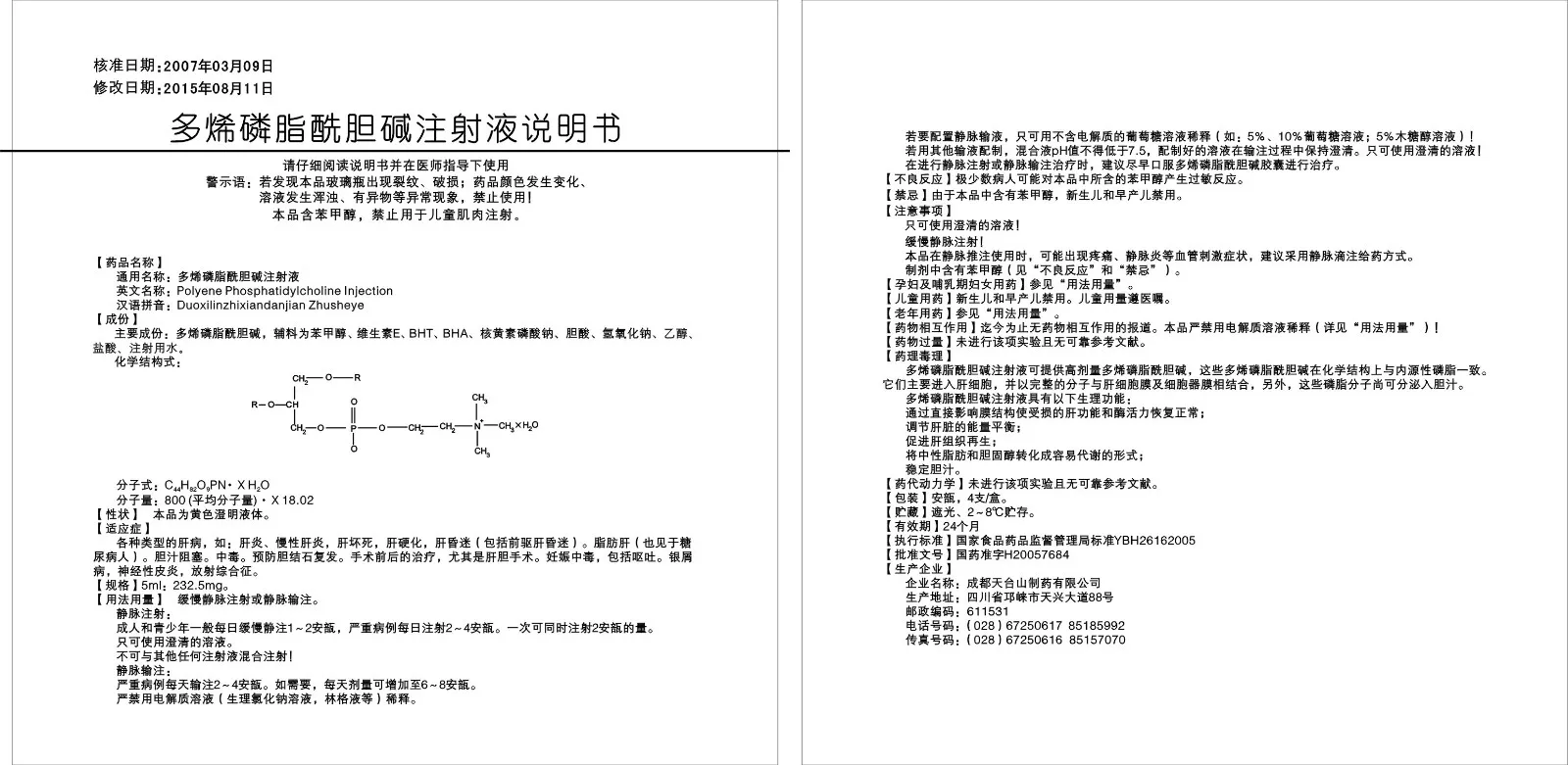
Currently the only * hepatocyte membrane repair injection in China, Sifu® (Polyene Phosphatidylcholine Injection) is an exclusive first generic drug of Haisco, approved for marketing in 2005. It is indicated for the treatment of various types of liver diseases, such as hepatitis, chronic hepatitis, liver necrosis, liver cirrhosis, hepatic coma (including prodromal hepatic coma), fatty liver (also seen in patients with diabetes mellitus), biliary obstruction, poisoning; prevention of gallstone recurrence; treatment before and after surgery, especially hepatobiliary surgery; toxemia of pregnancy (including vomiting), psoriasis, neurodermatitis, and radiation syndrome.
[1] Front Pharmacol. 2022 Mar 7;13:806787.
[2] Kong M, Li J, Chen Y. The dosage effect of polyene phosphatidylcholine injection for treating patients with acute drug-induced liver injury: a cohort trial [EB/OL]. International Liver Congress 2026 / European Association for the Study of the Liver (EASL) Congress 2026, Barcelona, Spain, 2026. Poster SAT-071.
[3] Patent Specification (Authorization Announcement Date: November 24, 2010, Certificate No. 702172).
Download prescribing information


Category Exclusive
Exclusive First Generic
High Purity and Safety
With 20 years of clinical application, it is supported by solid evidence. Three real-world studies (RWS) enrolled over 150,000 patients in total, proving that PPC Injection can markedly ameliorate abnormal liver function in patients with liver injury. One cohort study indicated that the 1860 mg/day PPC group was more effective for DILI, with good tolerability. It is recommended in 33 authoritative guidelines and consensus, incorporated into 10 clinical pathways, and cited in 4 interpretation manuals for clinical pathway therapeutic drugs


What is the position of Sifu® (Polyene Phosphatidylcholine Injection) in the treatment of liver injury in China?
It is currently the only hepatocyte membrane repair injection in China and a basic treatment drug for liver injury.
Is Sifu® (Polyene Phosphatidylcholine Injection) an exclusive first generic drug?
Yes, it is an exclusive first generic drug, filling the gap in hepatoprotective agents for cell membrane repair in China.
In which year was Sifu® (Polyene Phosphatidylcholine Injection) launched?
It was approved for marketing in 2005.
What common diseases can Sifu® (Polyene Phosphatidylcholine Injection) be used to treat?
Various types of liver disease, such as hepatitis, chronic hepatitis, hepatic necrosis, cirrhosis, and hepatic coma (including pre-coma). Fatty liver (also seen in diabetic patients). Biliary obstruction. Poisoning. Prevention of gallstone recurrence. Perioperative treatment, especially in hepatobiliary surgery. Toxemia of pregnancy, including vomiting. Psoriasis, neurodermatitis, and radiation syndrome.
Can Sifu® (Polyene Phosphatidylcholine Injection) be used to treat fatty liver?
Yes, it is fully applicable to various types of fatty liver (including fatty liver in patients with diabetes mellitus).
Does Sifu® (Polyene Phosphatidylcholine Injection) help with gallbladder diseases?
It can repair hepatobiliary cells, improve cholestasis, and promote recovery from cholecystitis, cholelithiasis, and related surgical injuries.
What is the use of Sifu® (Polyene Phosphatidylcholine Injection) in the field of surgery?
It is used for treatment before and after surgery, especially hepatobiliary surgery, including perioperative hepatobiliary protection, prevention and treatment of surgery-related liver injury and bile metabolism disorder, and acceleration of postoperative hepatobiliary function recovery.
What other non-hepatobiliary diseases can Sifu® (Polyene Phosphatidylcholine Injection) be used to treat?
It can be used for toxemia of pregnancy (including vomiting), psoriasis, neurodermatitis, and radiation syndrome.
What technical advantages does Sifu® (Polyene Phosphatidylcholine Injection) have in terms of purity?
After extraction and purification, it has extremely high purity, containing 95% polyene phosphatidylcholine molecules (core cell membrane components).
What patents does Sifu® (Polyene Phosphatidylcholine Injection) hold?
It holds multiple core patents, including preparation patents, with extremely high clinical safety.
As of May 2026, how long has Sifu® (Polyene Phosphatidylcholine Injection) been in clinical use?
It has accumulated 20 years of clinical application experience, with robust evidence-based data.
As of May 2026, how many real-world studies (RWSs) have been completed for Sifu® (Polyene Phosphatidylcholine Injection)?
Three large-sample RWSs have been conducted and completed, with 3 SCI papers published.
How many cases were included in the RWSs of Sifu® (Polyene Phosphatidylcholine Injection)?
The three RWSs included data from over 150,000 patients treated with polyene phosphatidylcholine.
What conclusions were drawn from the RWSs of Sifu® (Polyene Phosphatidylcholine Injection)?
Polyene phosphatidylcholine is effective in treating liver injury caused by various etiologies, with better efficacy and faster patient recovery at higher doses.
As of May 2026, how many guidelines and consensus statements have recommended Sifu® (Polyene Phosphatidylcholine Injection)?
It has received clear recommendations from 33 authoritative guidelines and consensus statements.
As of May 2026, how many clinical pathways has Sifu® (Polyene Phosphatidylcholine Injection) been incorporated into?
It has been formally incorporated into 10 official clinical pathways.
What is the status of Sifu® (Polyene Phosphatidylcholine Injection) in clinical pathway interpretation manuals?
It has been compiled and included in 4 clinical pathway interpretation manuals for therapeutic drugs.
In which year was Sifu® (Polyene Phosphatidylcholine Injection) included in the medical insurance catalog?
It was formally included in the National Medical Insurance Catalog in early 2009.
As of May 2026, how many medical institutions has Sifu® (Polyene Phosphatidylcholine Injection) covered?
It has been used in 7,000+ medical institutions of various types nationwide.
As of May 2026, what is the cumulative number of patient visits for Sifu® (Polyene Phosphatidylcholine Injection)?
In long-term clinical application, it has cumulatively benefited nearly 100 million patient visits.



