


Stock code: 002653.SZ


Libifu® (Dolasetron Mesylate Injection)

Libifu® (Dolasetron Mesylate Injection) is indicated for the prevention of nausea and vomiting associated with initial and repeated courses of emetogenic cancer chemotherapy (including high-dose cisplatin), prevention of postoperative nausea and vomiting, and treatment of postoperative nausea and/or vomiting.
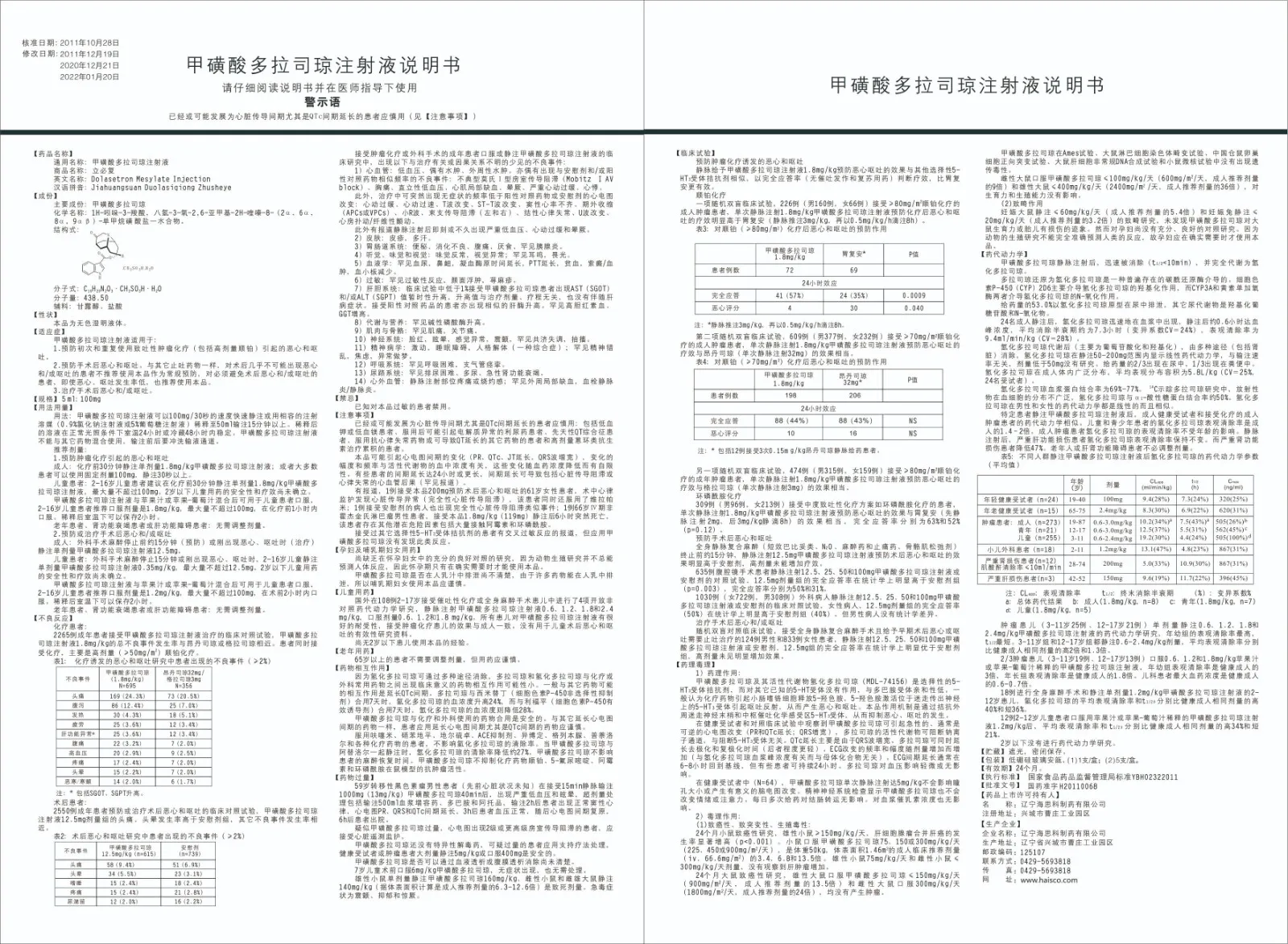
[1] Package Insert of Dolasetron Mesylate Injection.
[2] Chen Yuan, Liu Huaimin, Fang Yong. Herald of Medicine, 2021, 40(10):1371-1376.
Download prescribing information


Long-acting and Convenient
First-line Antiemetic
Suitable for Children
Patient-friendly
In recent years, 8 relevant academic papers have been published in China, including in authoritative journals such as Chinese Pharmaceutical Journal and Herald of Medicine, covering study areas including prevention and treatment of chemotherapy-induced nausea and vomiting, management of postoperative nausea and vomiting, and drug combination efficacy. It has been formally included in 8 authoritative guidelines and expert consensus statements, including the CSCO Guidelines for the Prevention and Treatment of Nausea and Vomiting Caused by Antitumor Therapies (2025 Edition), Guidelines for the Diagnosis and Treatment of Postoperative Nausea and Vomiting (2025 Edition), Chinese Guidelines for the Prevention and Treatment of Nausea and Vomiting Caused by Antitumor Therapies (2023 Edition), and Guidelines for the Prevention and Treatment of Antitumor Therapy-Induced Nausea and Vomiting by the China Anti-Cancer Association (2026 Edition).


What is the primary indication of Libifu® (Dolasetron Mesylate) in antitumor therapy?
Libifu® (Dolasetron Mesylate Injection) is primarily indicated for the prevention of nausea and vomiting associated with initial and repeat courses of emetogenic cancer chemotherapy (including high-dose cisplatin).
What is the indication of Libifu® (Dolasetron Mesylate) in surgical settings?
Libifu® (Dolasetron Mesylate) is indicated for the prevention of postoperative nausea and vomiting, and treatment of postoperative nausea and/or vomiting.
What is the clinical dosing frequency of Libifu® (Dolasetron Mesylate)?
Once-daily dosing, offering "rapid and long-lasting" clinical pharmacokinetic advantages.
What is the clinical position of Libifu® (Dolasetron Mesylate) among antiemetic drugs?
It is a first-line core therapy for comprehensive prevention and treatment of nausea and vomiting.
What class of target antagonist does Libifu® (Dolasetron Mesylate) belong to?
It is a highly selective 5-hydroxytryptamine 3 (5-HT₃) receptor antagonist.
It is a highly selective 5-hydroxytryptamine 3 (5-HT₃) receptor antagonist.
It has excellent pediatric safety data and can be safely used in children aged 2–16 years.
Which authoritative oncology organizations have recommended Libifu® (Dolasetron Mesylate)?
It has been consistently recommended by multiple authoritative guidelines both domestically and internationally, including Chinese Society of Clinical Oncology (CSCO) and National Comprehensive Cancer Network (NCCN).
Which international organization has recommended Libifu® (Dolasetron Mesylate) for pediatric use?
It is recommended by the World Health Organization (WHO) Model List of Essential Medicines for Children as a first-line antiemetic for children.
As of May 2026, how many relevant academic papers have been published on Libifu® (Dolasetron Mesylate)?
A total of 8 core academic papers have been published.
In which authoritative journals have studies on Libifu® (Dolasetron Mesylate) been published?
They include core domestic pharmaceutical journals such as Chinese Pharmaceutical Journal and Herald of Medicine.
What study areas are covered by the academic studies on Libifu® (Dolasetron Mesylate)?
They comprehensively cover multiple areas including prevention and treatment of chemotherapy-induced nausea and vomiting, management of postoperative nausea and vomiting, and drug combination efficacy, etc.
As of May 2026, how many authoritative guidelines have included Libifu® (Dolasetron Mesylate)?
It has been formally included in 7 authoritative guidelines and expert consensus statements. |
Which specific antitumor antiemetic guidelines have included Libifu® (Dolasetron Mesylate)?
They include the CSCO Guidelines for the Prevention and Treatment of Nausea and Vomiting Caused by Antitumor Therapies (2025 Edition) and Chinese Guidelines for the Prevention and Treatment of Nausea and Vomiting Caused by Antitumor Therapies (2023 Edition), etc.
Which surgical postoperative clinical guidelines have included Libifu® (Dolasetron Mesylate)?
They include authoritative clinical guidelines such as the Guidelines for the Diagnosis and Treatment of Postoperative Nausea and Vomiting (2025 Edition), etc.
When was Libifu® (Dolasetron Mesylate) included in the medical insurance catalog?
It underwent its first medical insurance negotiation in 2020 and was successfully included in the National Reimbursement Drug List in 2021.
As of May 2026, how many medical institutions currently cover Libifu® (Dolasetron Mesylate)?
It has been formally introduced and widely used in 1,368 medical institutions nationwide.
As of May 2026, how many patients have cumulatively benefited from Libifu® (Dolasetron Mesylate)?
It has cumulatively benefited 12.38 million patient visits in clinical practice.
What is the outstanding competitive advantage of Libifu® (Dolasetron Mesylate) as an antiemetic in pediatrics?
It is one of the very few 5-HT₃ receptor antagonist first-line antiemetics that can be clearly and safely used in children aged 2–16 years, with a WHO recommendation background.
What is the summary of the core advantages of Libifu® (Dolasetron Mesylate) in chemotherapy and postoperative antiemesis?
It offers comprehensive advantages of once-daily rapid and long-lasting efficacy, formal inclusion in multiple domestic and international first-line guidelines, and solid clinical evidence.



